AM Adult Fly Monitoring Using Red Sticky Sphere
Brief: Our orchards have multiple insect pests requiring management considerations this week. The 1st generation of Codling Moth (CM) is nearing the end of its larval emergence with Obliquebanded leafroller (OBLR) requiring continued management. Apple Maggot has emerged, found in Clintondale, NY in unmanaged orchards.
 June….Obliquebanded Leafroller (OBLR) is in the peak of egg hatch in the Mid-Hudson Valley. Employing the same A.I for both CM and OBLR will be foundstional for resistance management, using a different IRAC class for the 2nd generation. San Jose scale (SJS) populations appear low with Wooly apple aphid (WAA) having yet to show this season in commercial blocks given the dramatic changes in temperatures during spring.
June is proving to be mild and relatively dry with 1.31″ inches of rainfall in Milton, NY over the past 28 days. Over the past 7 days we received 0.92″ inches at the NEWA Milton Orchard station, providing increased soil moisture for apple maggot to begin emerging from the soil over the weekend. Additional rain forecast over the next few days will likely increase the rate of AM emergence this coming week. Yet, this week will be very hot (Forecast Thursday @ 100oF ) and relatively dry.
Sunburn protection is advised!!
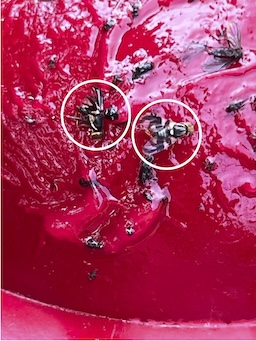
Adult apple maggot flies. Female flies (R) are black, with a pointed abdomen with four white cross bands. The males (L) are smaller and have three cross bands on a rounded abdomen.
Apple Maggot (AM): In this weeks assessment of our AM traps we captured an average 2.5 adults per Red Sticky Sphere trap (L). One block exceeded the 5 adult per trap threshold in a high pressure, mixed variety block including untreated trees from the previous year.
At this point in time each orchard block should now have baited AM sticky sphere traps out to determine AM pressure in blocks containing early maturing varieties.
Ginger Gold and Honey Crisp are highly susceptible to early maggot infestations and should be managed accordingly. High relative humidity during the morning hours will increase deposition of material while cool temperatures reduce the likelihood of detoxification using pyrethroid based pre-mix insecticides.
Application windows for the next 48 hours: NOAA Weather
Introduction: The apple maggot, Rhagoletis pomonella, also known by mature tree fruit growers as the “railroad worm”, causing ‘trails beneath the skin of infested apple, is a native of eastern North America. The fly originally bred in large fruited hawthorns (Crataegus sp.) and as colonization from Europe and tree fruit production began in earnest in the 17th century, the apple maggot adopted the apple as a principle host. The fly has been a major fruit pest in the northeastern United States and Canada for the past 200 years.
During the early 1980s, the AM became established in California, Oregon, Washington, Idaho, Utah, and Colorado, becoming a serious threat in the major apple production areas in these western fruit growing regions. Complete control of this insect is necessary as fresh market apple must be free from AM injury and larval presence during storage and shipment overseas.
AM normally has a single generation a year, although there are two exceptions: AM may have a partial second generation in the southern part of its range, and some individuals remain in the soil two winters before emerging as adults.
P.J. Chapman ‘Bionomics of the Apple
maggot in Eastern N.Y.
Red sphere traps are very attractive to mature adult female AM flies, ready to oviposit. Through the development of the red sticky sphere and attractive lures using ammonium acetate, butyl hexanoate (fruit odor) ammonium carbonate (food odor), or blends, the trigger for apple maggot management can be postponed until mature flies capable of laying viable eggs are captured in traps. When placed along wooded edges and abandoned blocks in commercial apple, traps can provide optimum timing for management of early maturing, highly attractive varieties such as Ginger Gold, using a threshold of 5 flies per trap.
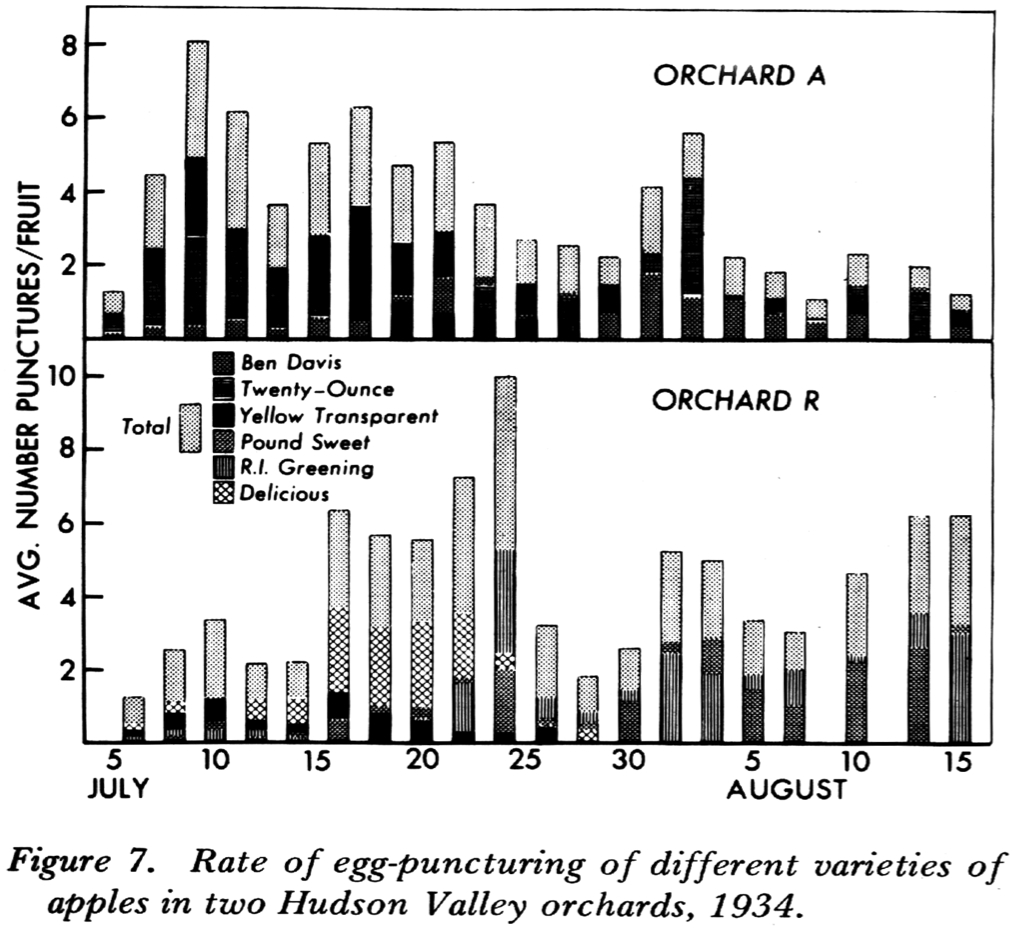
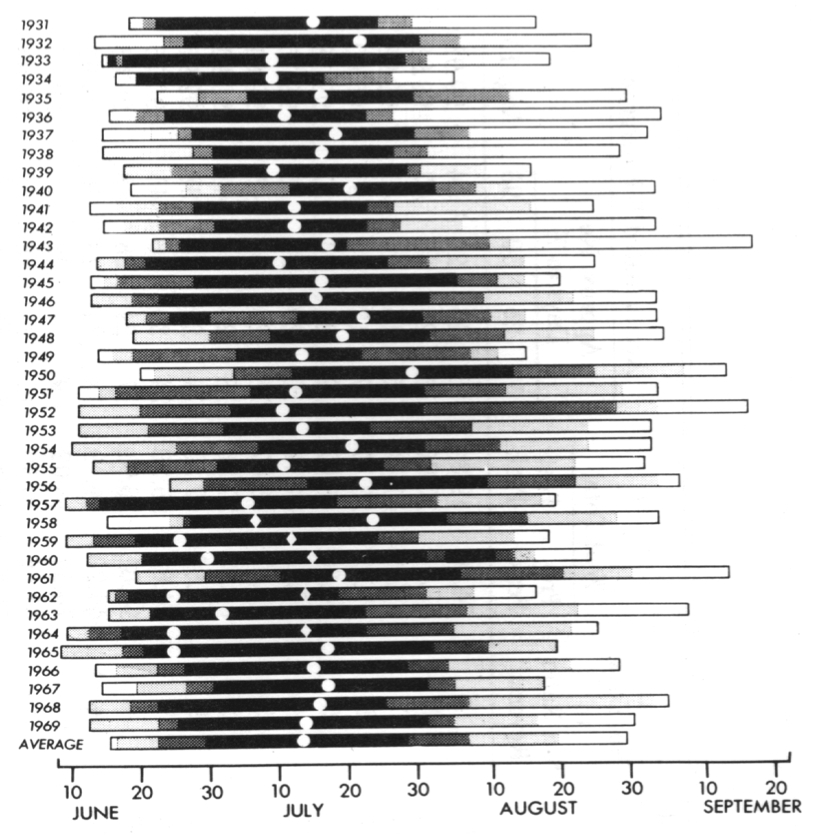
P.J. Chapman and R. Dean found dramatic variability of AM emergence from season to season. There is considerable variability between farms with infestation levels differing between farms based on a number of variables.
These include weather, soil moisture and site, with apple variety preference of early egg laying puncture of fruit coinciding with varietal maturity.
Evaluations of apple maggot emergence from 1931 to 1969 in Hudson Valley Orchards showed that in 31% of the years monitored for emergence, AM emerged beyond the 20th of August. Yet there was little or no emergence of new flies after the 1st of September.