Last Week in the Hudson Valley
Brief: Newly planted trees will continue to require irrigation during this dry spell. Rain amounts in May (2.37″) at the Milton, NY NEWA station showed only 0.24″ during the 1st 2 weeks of June, with a water balance of -67445 (gal./A) in 3′ x 12′ spacing. This weeks forecast from tonight through the next 7-days will provide a modest 1″ of rain if forecasts hold with temperatures dropping into the 80’s.
Generally drought conditions will often drive insect pests like the mite complex, stink bug and European corn borer (ECB)Ostrinia nubilalis into apple plantings. For ECB, succulent new growth provides ideal resources for developing larva. Egg laying of ECB has already begun. Hatch and management should begin at 800 DD base 50F (874 today). Hatch will continue over the next two weeks. Hatch of Oriental Fruit Moth (OFM) can also move into apple shoots early in the season to cause flagged and dying shoots in unmanaged tree fruit.
The second generation of OFM adults historically emerge in June with larva emergence beginning in July. Terminal growth in newly planted apple is essential to develop fruit buds and lateral branching for next season. The loss of tree architecture in the first year will significantly reduce fruiting potential and subsequent economic returns. Scout across the block along the leaf stem nodes for frass and in shoots for flagging over the next 3-4 weeks. Management should begin at first signs of injury. Materials used for management to control codling moth and obliquebanded leafroller this week should reduce ECB and OFM when applied to new plantings over the next few weeks.

In-Depth: When it comes to apple production we typically don’t concern ourselves with the likes of European corn borer. However, this insect, especially in years of drought can cause considerable damage to newly planted trees. Populations of ECB began in relatively low numbers throughout NY State this season but will likely continue to climb over the next few weeks. In new plantings we have seen ECB begin to burrow into the growing shoots in mid-late June so scouting should begin in newly planted trees this weekend. None have been observed in the mid-Hudson Valley to date.
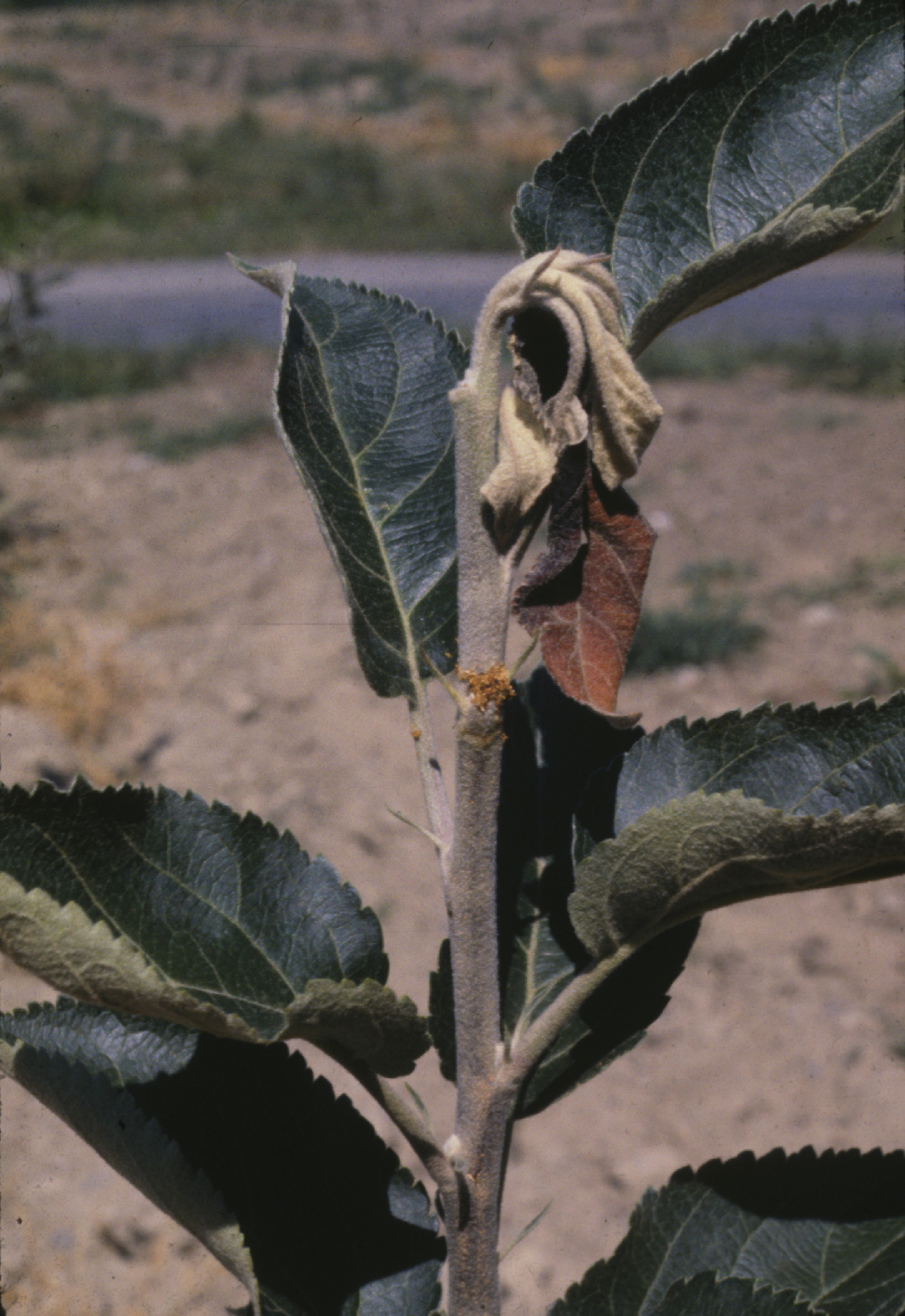
Young Apple
Female ECB moths will begin laying egg masses on the underside of apple leaves. If ECB is present, larval feeding should become evident in newly developing apple shoots over the next few weeks. You will see brown frass and ooze where the leaf petiole and stem join. It is likely that fruit trees with ECB injury will have higher damage levels along the perimeter, especially where tall grasses and woody stemmed broad leaf weeds are present.
The Eastern strain of European corn borer (New York / Eastern Z-strain) has a wide host range, attacking robust herbaceous plants with a stem large enough for the larvae to enter. I have not heard reports of the hybrid strain of ECB attacking apple.
Some of the common weeds infested include barnyardgrass, Echinochoa crus-galli; beggarticks, Bidens spp.; cocklebur, Xanthium spp.; dock, Rumex spp.; jimsonweed, Datura spp.; panic grass, Panicum spp.; pigweed, Amaranthus spp.; smartweed, Polygonum spp.; and others.

There are reports that severe weather influences European corn borer survival. Heavy precipitation during egg hatch is sometimes an important mortality factor. Low humidity, low nighttime temperatures, and heavy rain and wind are detrimental to moth survival and oviposition. However, like most insect pests, they seem to thrive during unlikely weather scenarios in years past. Drought seems to favor development and generational success.
Typical examples of ECB feeding on apple is similar to that of Oriental Fruit Moth on apple with frass and entry under petiole or side of new shoots, producing terminal bud decline, flagging. In many cases, the loss of the central leader will occur, significantly reducing tree growth and fruiting establishment.
From prior observations, the larva reside within the upper most part of the shoot, 8-10 inches from the tip. Frass is visible at the base of the petiole and leaves are browning from the tip back toward the stem of infected stem portions.
Trap sites across NYS show very low early season adult flight. Later into the season we are now finding increasing ECB adults in pheromone traps across the state that will likely require intensive management on sweet corn.
Newly planted apple should be scouted frequently, especially if drought conditions continue during the latter part of the summer.
Irrigated apple become very attractive to ECB adults as they move out from low moisture weed hosts along orchard borders. Pheromone trap placement for ECB in newly established orchards should be along the edge where know weed host plants reside.

Applications of most insecticides will do little to manage the larva within the tree. However, management at the early onset of hatch will reduce further infestations in blocks that already show the beginnings of ECB boring and larval feeding.
Pyrethroids become less effective to ECB populations as temperatures increase, as this class of insecticides is more readily detoxified by insects when temperatures exceed 70F.
In non-fruiting and newly planted apple, Delegate 25WG is labeled for use on apple in NY and is very effective at controlling ECB on newly planted trees. Delegate and generally the spinosad class of insecticides are not as negatively effected by increased temperature. Bt formulations are also labeled for ECB, and may require tight intervals for acceptable management during periods of intense sunlight and heavy weathering. IRAC 28 insecticides (Altacor, Exirel, Verdepryn) applied for CM and OBLR will also effectively manage corn borer in fruiting trees.
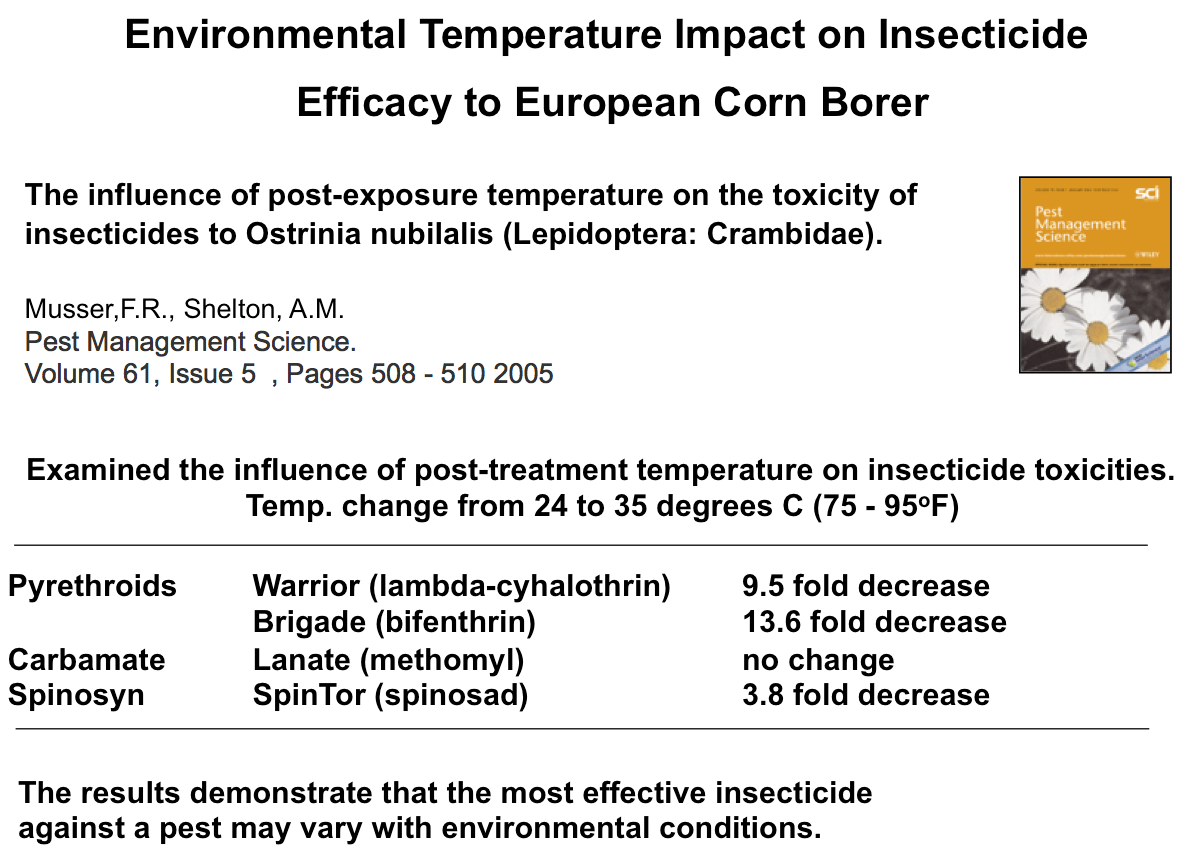
Insecticides used against 1st generation Codling Moth and Obliquebanded Leafroller at this time will likely impact ECB. However, newly planted trees that have no marketable crop are often ignored as mature trees with fruit concerns over CM, OBLR and Late June Apple Maggot infestations tend to distract growers from addressing new plantings. Management of ECB to reduce shoot injury to newly planted trees will require a specific management plan and no less then bi-weekly applications of effective insecticides to maintain terminal shoot growth during ECB hatch.
The Sweet Corn Pheromone Trap Network Report has regional trap counts for European Corn Borer and degree day accumulations.