1st Plum Curculio Egg Laying Scars: Ginger Gold Fruitlets Beyond 10mm As Bloom Wains
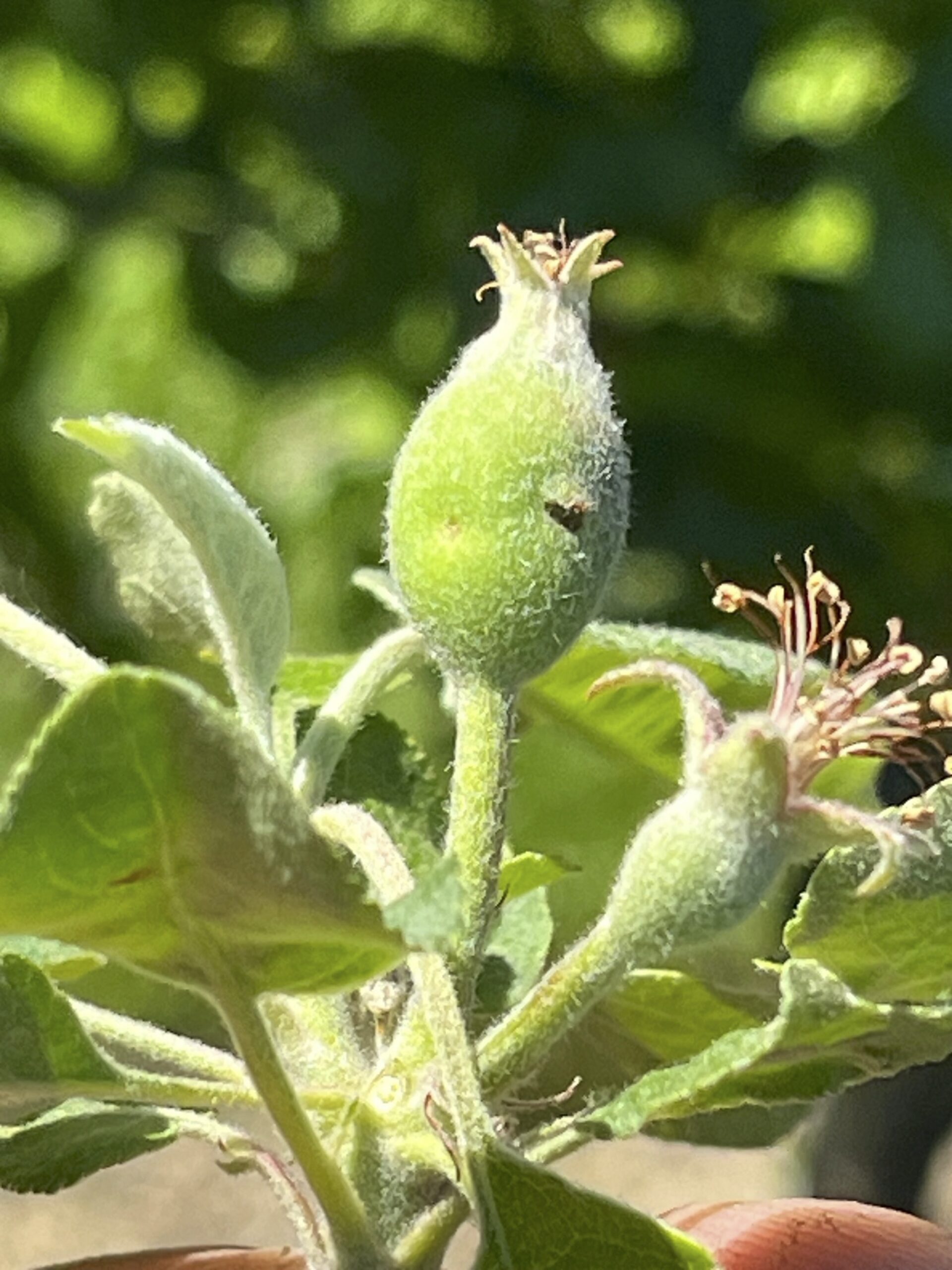
Fresh PC egg laying scar 5.17.2026
Overview: The Plum Curculio (PC)(Conotrachelus nenuphar) beetle is a primary insect pest of apples and stone fruit. It is is a true native weevil, found throughout the eastern states to the Rocky Mountains of the US and Canada. The adult Plum curculio overwinter in leaf litter, emerging in the spring to forage and lay eggs in crescent-shaped scars into fruit as evening temperatures rise above 60oF for a few days. The beetle causes extensive cosmetic and internal injury from egg and larval feeding in commercial tree fruit pome and stone fruit production.
Sustained cold nights and rain driven cool temperature have kept PC from its migration into orchards. Our early varieties now exceed the >5mm diameter, the size at which the fruitlets become vulnerable to PC. As of Saturday (16th May) daytime temperatures migrated from the previous day’s 60oF with Sunday reaching near 90oF. The two following days (Monday & Tuesday) are forecasted to bring temperatures into the lower 90’s in Milton, NY. As the beetle becomes very active at night, the next three nights are predicted to be above 60oF, the window for onset of PC activity. This is a critical window for management.
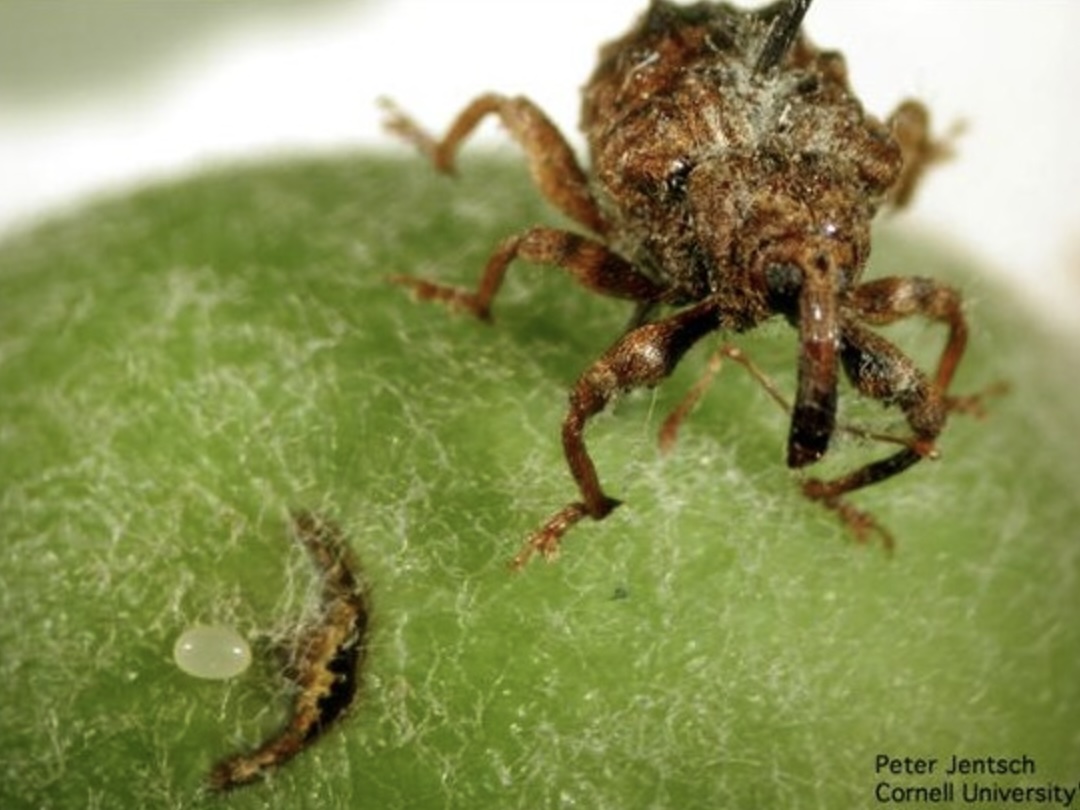
Plum Curculio adult female, crescent scar and egg
As of this afternoon (May 17th), PC injury was observed in untreated apple. An unsprayed border sentinel tree, such as cherry or plum, is a good tell tale for finding the first signs of PC injury. Upon the first sting, management should begin in earnest.
As many early varieties have lost the King fruitlets, lateral fruitlets may be smaller, yet any fruit above 5mm is vulnerable.
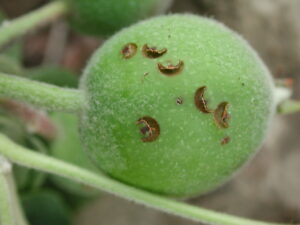 Milton, NY presently has 378 accumulated degree days (base 50°F BE) from Jan. 1st with fruitlet sizes in Ginger Gold exceeding 8-11mm, across early to mid-blooming varieties. Control measures for PC are needed through 1st and occasionally 2nd cover. In years in which cooler weather prevails and extended PC activity occurs, a 2nd cover may be required. PC management is only needed until 308 degree days have accumulated since petal fall. Petal Fall of McIntosh occurred Monday May 5th in Highland, a relatively warm site near the Hudson River. Monitoring this event over the next few weeks can be done using the Access link to the NEWA Model for PC.
Applications for plum curculio should control the pest for about 10-14 days based on materials and weathering.
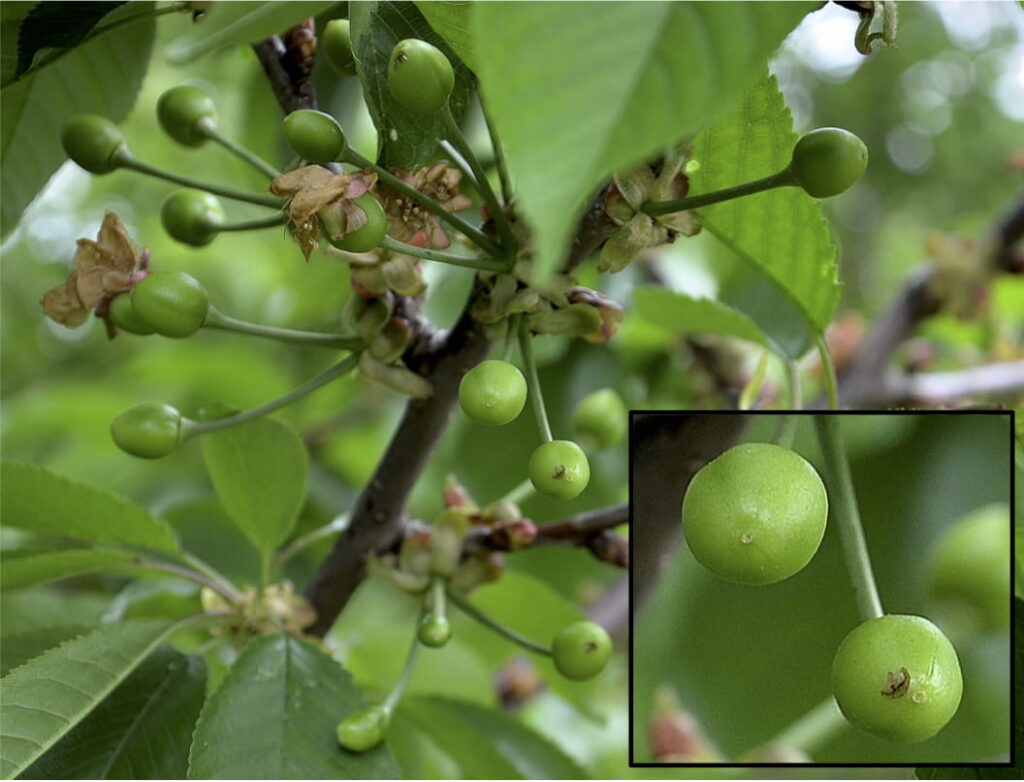
Stone fruit (cherry) sentinel for onset of emerging Plum Curculio egg laying and fruit feeding activity in spring (not as effective this season given the cold temperatures).
As PC damage often occurs in the same locations in orchards year after year, PC injury is fairly predictable from past observations. Frequent short interval rains will remove surface contact insecticide residual. A short interval, from petal fall to 1st cover (<7-10 days), should be employed for PC management even if residual efficacy is not compromised by rain events.
Maintaining control of PC during the migration period is essential. If a delay in emergence of PC occurs as cool temperatures return next week, management of PC, even in low-pressure orchards, may be prolonged. In high-pressure orchards, additional sprays along the perimeter of the orchards should be considered until the oviposition model predicts that control is no longer necessary.
Remember to keep codling moth on the radar after PF if border applications are not followed up with whole orchard applications. If alternate row applications (ARM) are used, be aware that ARM are very effective against mobile insects such as PC and apple maggot, but less so with sedentary, less mobile insects such as obliquebanded leafroller (OBLR).
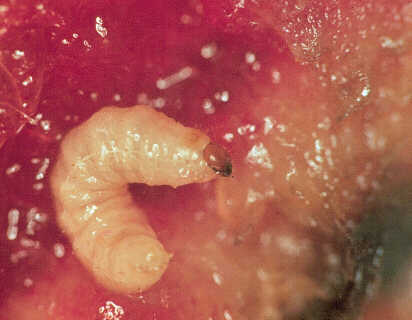
PC larva in peach
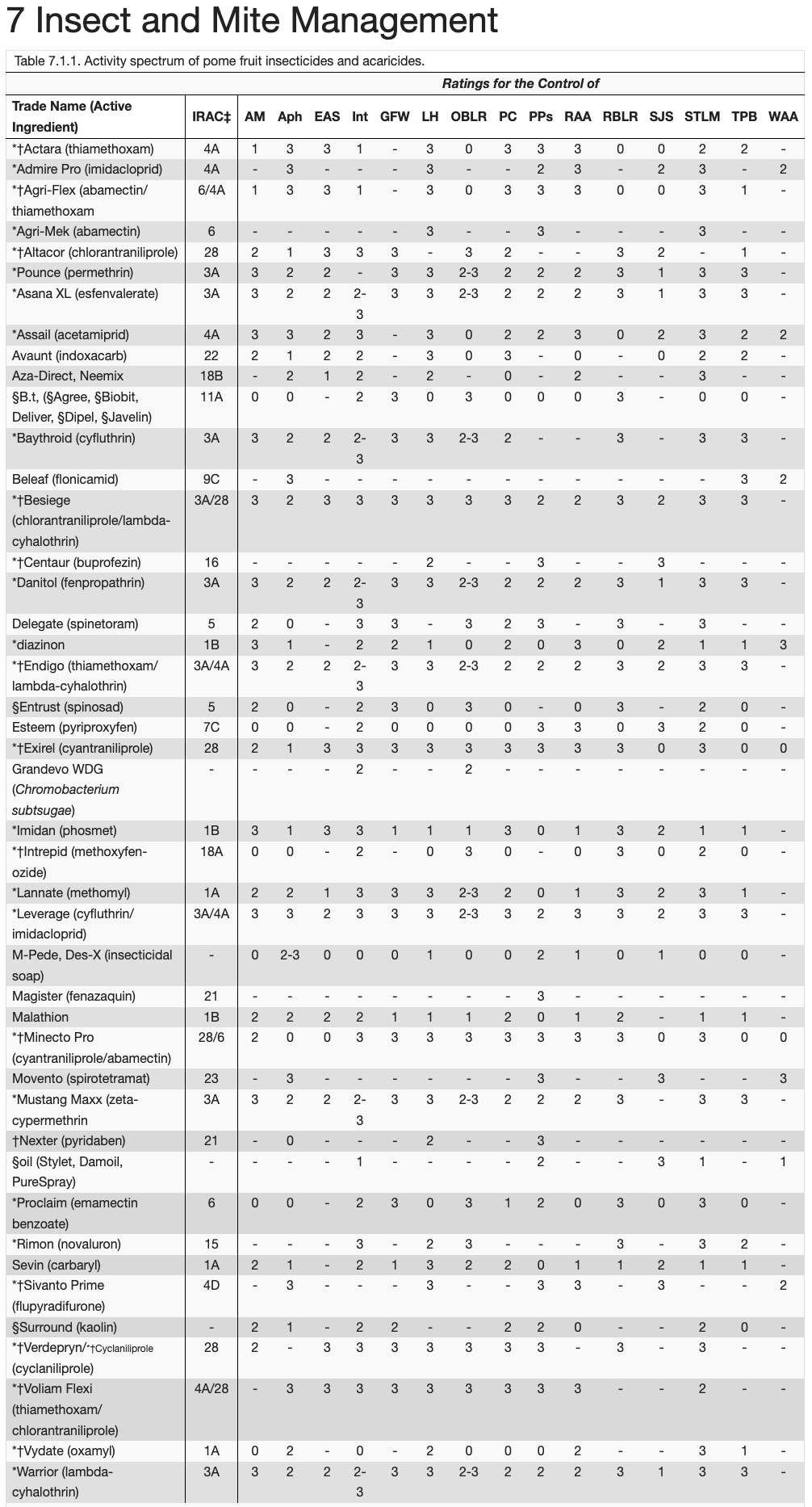
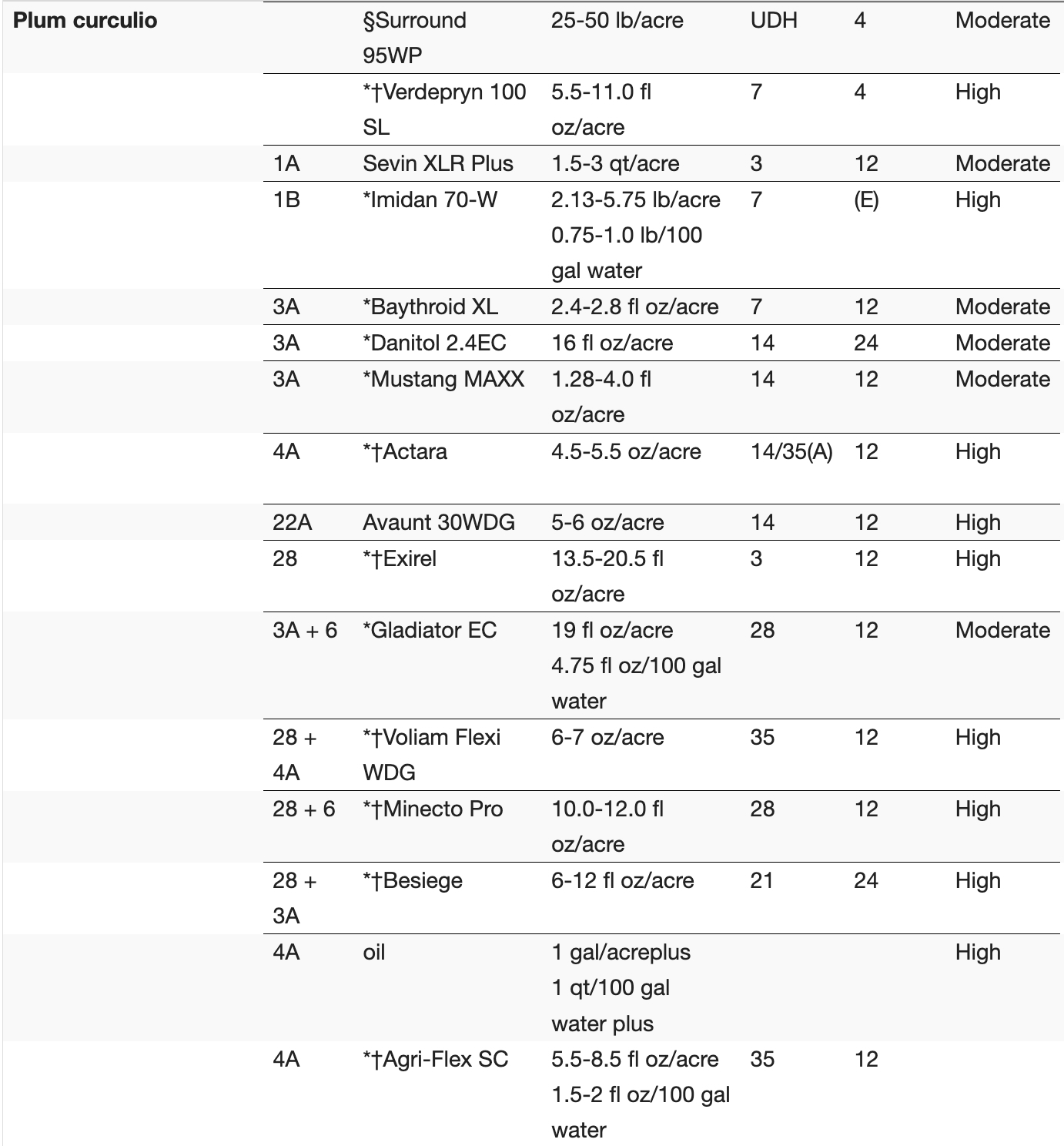
Insecticides effective against the PC include a broad list of materials that can be found in the Cornell Guidelines. A few of these include…Avaunt 30WDG (indoxacarb), the neonicotinoid Actara 25WDG (thiamethoxam), the OP Imidan 70WP, WSP (Phosmet), carbamate; Sevin (carbaryl), and pyrethroids Danitol 2.4EC (fenpropathrin), Asana XL (esfenvalerate), Baythroid XL 1E, 2EC (beta-cyfluthrin), Lambda-Cy 1CS (lambda-cyhalothrin), Warrior 1CS (lambda-cyhalothrin), Proaxis 0.5CS, and pre-mix formulations Endigo ZC (lambda-cyhalothrin / thiamethoxam), Leverage 360 (imidacloprid / beta-cyfluthrin), Gladiator (zeta-cypermethrin / avermectin), Voliam Express (lambda-cyhalothrin / thiamethoxam), Voliam Flexi (chlorantraniliprol / thiamethoxam).
The pyrethroids and phosmet have broad spectrum activity to include PC, EAS, lepidopteran larva (OFM, CM, Lesser appleworm (LAW) and Obliquebanded leafroller (OBLR). They have no activity against rosy apple aphid (RAA) in curled foliage. The neonicotinoid Actara 25WDG (thiamethoxam) at 1C would maintain low PC populations and keep Green and Rosy Aphid populations low for a few weeks.
Neonicotinoids: Admire Pro and / or Assail do not have acceptable efficacy for PC management.
PC egg laying in fruit upon reaching 5mm.
The pre-mix ingredient notes:
Avermectin (AgriMek, Gladiator…) must be used with a penetrant at the proper rate to effectively move into leaf tissue for mite management.
Chlorantraniliprol, the active in Altacor, is excellent against the range of lepidopteran larva with limited spectrum on other arthropod pests.
Thiomethoxam (Actara) has virtually no efficacy against internal lepidopteran larva. Exclusive use of this product at 1st or 2nd Cover will put you at risk for CM larval injury.
Lep Complex: Oriental Fruit Moths (OFM) flight has begun in earnest over the past week and moving toward peak flight. OFM eggs from the first generation are being lain. A petal fall spray should include an insecticide with lepidopteran activity for the parade of ‘worms’ including OFM, Red banded Leafroller, Speckled Green Fruitworm, Obliquebanded Leafroller larva, Spongy Moth and various forest geometrids….ie inchworms or measuring worms, known for their distinctive “measuring” movement.
Additional applications will also be applied at about 10-14 days after petal fall for the Lep. Complex, primarily Codling Moth, that will also reduce OFM. This second spray against the first generation of OFM is particularly important in high-pressure orchards (past history of OFM fruit damage or high pheromone traps catches, (>10/ trap/ week) to control the remainder of hatching larvae. If this spray is applied at the normal time of a first cover spray (10-14 days after petal fall) it will also control early hatching CM larvae from the first flight of adults.
Codling Moth (CM) flight has begun with sustained capture on May 16th in milton, NY. CM egg-laying will likely begin within the next 2-3 weeks unless cool temperatures reside for a time. The first eggs will hatch after 220 DD from first sustained trap capture. Insecticides that need to be present before egg laying (Rimon) should be applied at about 50-75 DD, made shortly after sustained flight. Apply insecticides that target early egg laying period at 100-200 DD. Remember, Actara 25WDG employed at 4.5-5.5 oz/acre is excellent against PC but has no commercial value to manage the lepidopteran complex, specifically codling moth. Select materials with highest efficacy rating against CM if past crops have had internal feeding or stings from CM.
CALS Guidelines on PC & Insecticide ratings for Insects and Mite (Below)